Monday, May 7, 2012

Riquewihr, Alsace

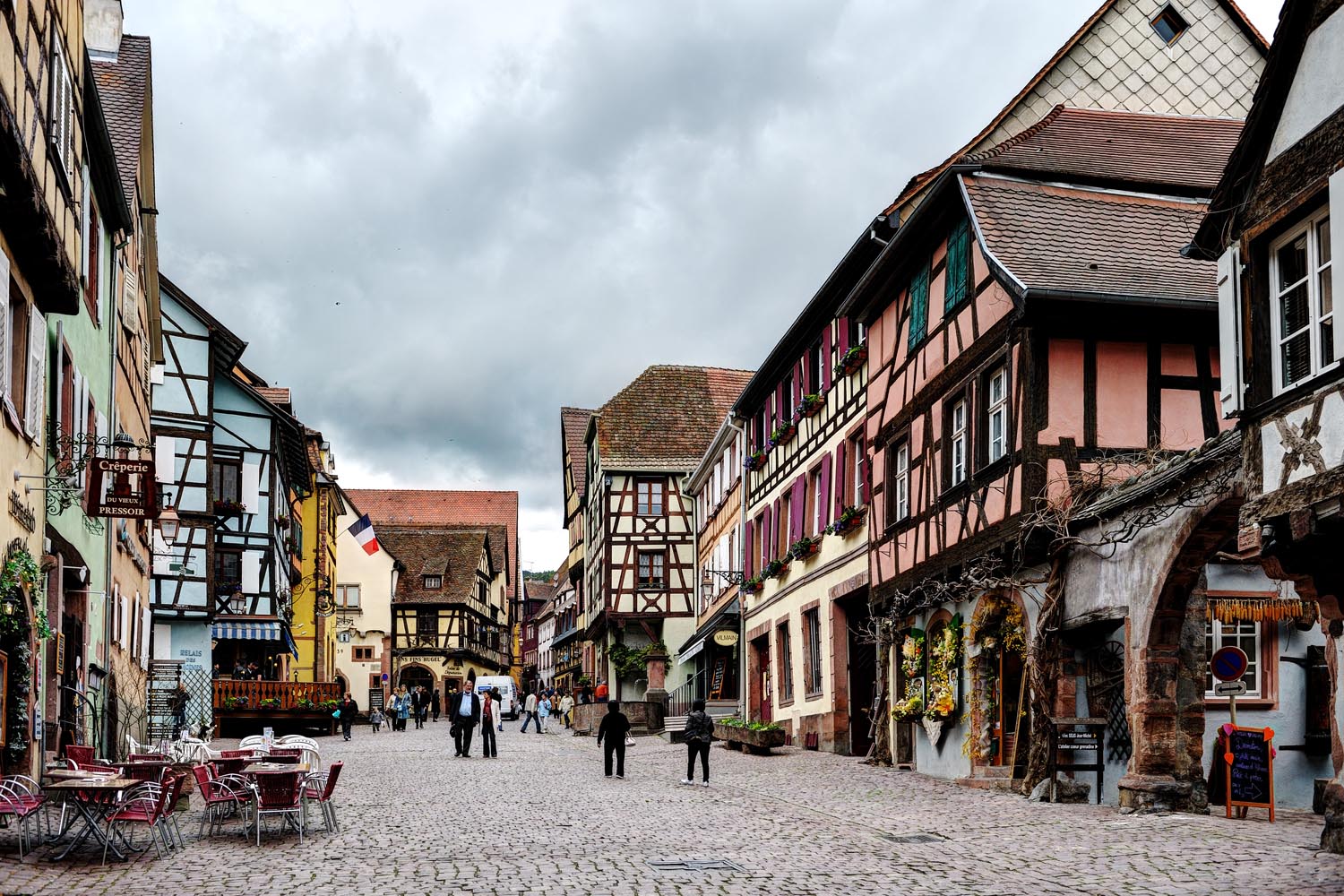
Our first stop along the Route du Vine Alsace on May 7, Sunday is Kaysersberg, the next village that we visited was Riquewihr, a Michelin Green Guide 3-star destination.  The village is still surrounded by a rampart.  The gate to the city is actually the City Hall.  We could not park near the front gate but went to the side and walked in through the side entrance.  It is better maintained for the touristic purpose, thus less local car traffic.  Can you see the little grey cat that was walking away from us?  Grace took this picture.

I took this one.  The cat sat near the flower bed stared at us.

 Grace took this picture, see the restaurant on the right.

I took this one and walked into the restaurant to check it out.  It seems to be quite nice.  We decided to come back for lunch after a tour of the village.


We really did not walk far, after seeing so many Alsace cute half-timber houses at Strasbourg, Colmar and Karysersburg, we felt that we had seen enough.


This is City Hall and the front entrance coming into the Village.

We came back to the restaurant for lunch,  Can you see the shape of the glasses?  They are in vogue all over the place and is especially good for the Alsace white wine.

Grace insisted on that she wanted to have white asparagus, but it was only available in the menu and could not be ordered separately.  End up, I had the menu, which is a more Parisian cuisine and she ordered the pig knuckles, a local Alsace speciality.  She had my white asparagus appetizer and the knuckles and I had my fancy chicken breast.

The way we were fed, I would be as big as my friend in the picture.

 The village is surrounded by vineyard.


After lunch, we headed back the road that would take us across the Vosges Mountain back into Lorraine region.  The grey cat that we saw coming into the village was still there bidding farewell to us.

Route du Vine Alasce

The wine growing region of Alsace is alone the slope of Vosges Mountain facing west between Strasbourg and Mulhouse.  We could see this vast expanse of land on our right when driving south from Strasbourg, on our left hand side is Rhine river that separates France from Germany in this area.  However, the best way of exploring this wine growing region is following the Route du Vine Alsace along the foot of Vosges Mountain.  Along the way, there are many villages all involved in wine making and some of them are very historical.  There are also many vineyards open for tasting and shopping.  Since it is impossible for us to bring wine on the airplane back to Taiwan, we did not stop to visit any of them.


This simple image is more complicated to produce than it appears.  Two photographs were taken one focused on the flowers and the other focused at the distant vine.  In order to maintain the correct prospective, I was almost lying on the ground.  The images were then stacked together in Photoshop to create an image that everything is in focus.

It is normally not an issue for point-and-shoot camera and it is less an issue even for D7000 which is DX format.  The smaller sensor in these cameras create images with deeper depth-of-field, which means it is easier to get everything in focus.  For the FX format cameras, such as D700, we have to pay more attention.


The is the car that we drove around during our trip to Champagne, Lorraine and Alsace.  We rented the car from Hertz through Hotwire, a reasonably priced medium-size car with standard gearbox.  I printed all the road directions from google map but we still did not feel confident enough.  We asked for an addition of GPS unit at the rental car counter in the airport.  They had to charge a reasonable amount of fees for the GPS, which we agreed.  However, there was no portable GPS to add to the car and they gave us a free upgrade.  I only found out when I had the key to the car that they gave us a brand new automatic Mercedes with built-in GPS.  It had less than 3000 km on it and it drove like a dream.  It ran on diesel, for the whole three-day trip that took us from Paris to Alsace and back, it used only one tank of gas.  The GPS worked great, could not imagine how lost we would be if we did not have it.

Kaysersberg, Alsace

We left Colmar in the Morning of May 7, Monday to visit the wine region of Alsace.  The first town we visited was Kaysersberg.  It is a two-star tourist destination on the Michelin Green Guide.  The houses in the village are almost frozen in time and look like coming out from a story book.  It is actually a very busy town.  Although there are restrictions of letting vehicles into the town, but local people have cars parked all over the place to go about their daily business.  The village is also very touristic with a lot of souvenir shops and restaurants.  It is located in the middle of the wine producing region of Alsace.


HDR Image Processing

Most of the time during our trip to Champagne, Lorraine and Alsace, the sky was very cloudy with occasionally patchy blue sky and sunshine.  It sometimes made very dramatic lighting conditions for the landscape as the cloud moved through the scenery.  However, it made normal photography in the city very difficult.  The sky was often over blown with the cityscape low in contrast and appeared washed out.

We dealt with this situation using HDR Image Processing.  We would either take photographs at series of different exposures then merged them together in the HDR software, or I would take an evenly exposed picture (RAW) and used RAW processing software (NX2) to create a series of images at different exposures then merged them together.

My HDR software (Photomatix Pro) basically has two types of processing to choose from: Exposure Fusion and Tone Mapping.  Exposure Fusion creates more natural looking pictures, Tone Mapping can create very dramatic artifical look.  The following three sets of images are the same or similar images processed by these two different methods.  

In most situations, we did not have much room in the villages to position our camera in perfect height and distance to gain correct prospective of the buildings.  We would try our best then correct the prospective of the images later in Photoshop.  For these three sets of images, I was able to stand on a bridge to get correct prospective and composition thus very little post-processing adjustment was needed.


Sunday, May 6, 2012

Petite Venice, Colmar

After an hour and half drive on the A35 from Strasbourg, we arrived at the old town of Colmar, Petite Venice.  This is a photo taken from the window of our hotel room at Hostellerie Le Marechal.  You can see why the area is called Petite Venice.

Our Hotel is the green building on the left.  The little pink sidewall marked the Romantik Hôtel Restaurant, which sits right on the canal.

The sun set quite late at 9 PM, thus we still had plenty of light to walk around the old town and taking some pictures.


We had dinner in the Romantik Hôtel Restaurant.  We had fried frog legs as starter then turbot fish with Spanish rice.  However, the most memorable thing was the grande cru Alsace white wine with the most incredible gold color.

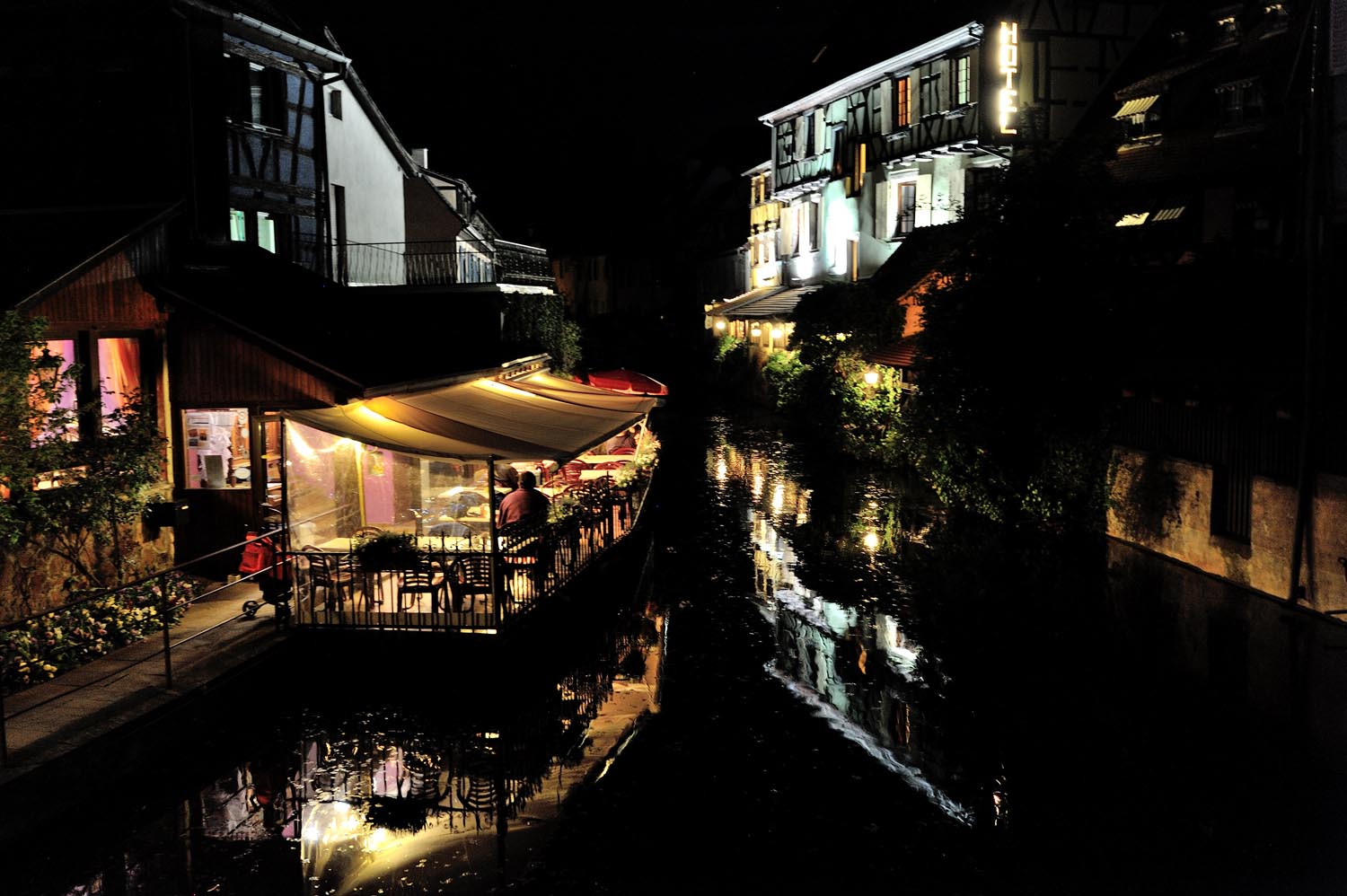
I came out again after the dinner to photograph some night scene around the hotel.

This is the front of our hotel.

This picture was taken the next morning of the town square in front of the hotel.  We had a nice breakfast and bought some charcuterie at the corner butcher shop.  We then went on a tour of the Route de Vine Alsace.  We would visit two small villages before heading to Nancy.

LinkWithin

Related Posts with Thumbnails